How we make an “every day” war map film
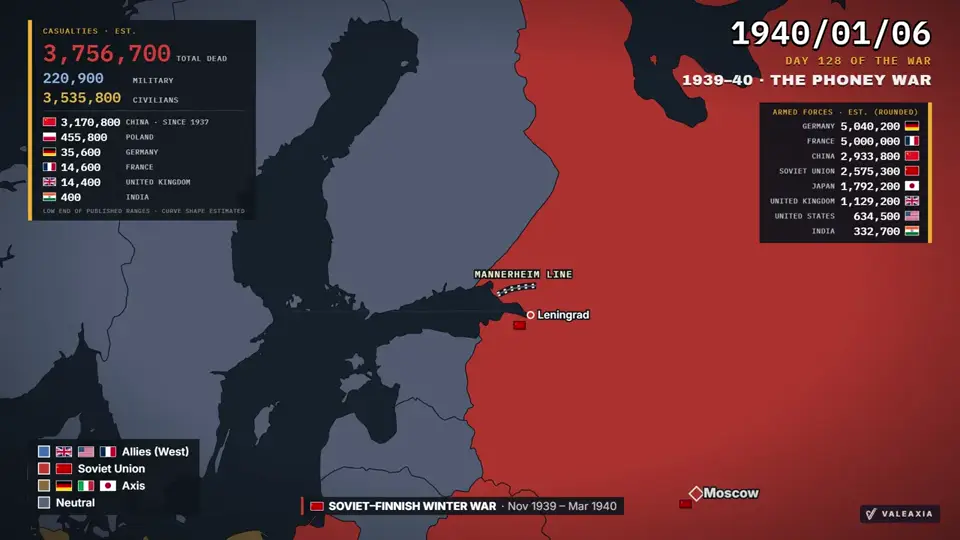
Six years of war on one map, moving day by day. The four layers behind it, and why the hardest part is not the animation.
Our “every day” films show a whole war on a single animated map, from the first day to the last. People expect the animation to be the hard part. It is the data.
Layer 1: borders that change
Every period gets its real historical borders. A 1939 map with today’s borders is the fastest way to lose a history audience in the comments.
Layer 2: fronts and events on a timeline
Front lines, battles and turning points are placed on exact dates, then converted into seconds on the timeline, so the map and the narration never drift apart.
Layer 3: numbers that move
A day counter and a running casualty panel give the viewer something to track. They are also the easiest way to keep “something new” on screen every few seconds.
Layer 4: sound
Archive voices at the turning points and sound design under the map. A silent map feels like a screensaver; the same map with the right sound feels like a film.